
Trump calls Gavin Newsom ‘the President of the United States’ while insulting his intelligence
Trump Talks About Curtains While Our Servicemen are Being Killed
The New Republic, March 2, 2026 – Trump Brags About Gold Drapes While Discussing Iran War Plans
This is the man we’re supposed to trust with another U.S. war in the Middle East
Trump’s Angry Rant After Supreme Court Decision

Are Republican’s Trying to Coverup Trump’s Early Signs of Dementia?
Several speech and cognitive experts have noted changes in Trump’s communication style over recent years. Analyses have highlighted patterns such as increased tangentiality, simplified sentence structures, and repetitive language, which some experts suggest could be indicative of cognitive decline. For instance, a study comparing Trump’s recent speeches to those from earlier years found a decrease in linguistic complexity and coherence.
Additionally, Dr. Jennifer R. Mercieca, a rhetoric expert, has pointed out that Trump’s unscripted speeches often appear disorganized and digressive, potentially signaling cognitive issues . Dr. John Gartner, a psychologist and founder of the “Duty to Warn” group, has also expressed concerns, suggesting that Trump’s behavior exhibits signs consistent with dementia
The eighth round of Trump's humiliation, Trump surprised announced that he was going to leave early after dinner with the leaders. A visibly defeated Trump boarded the plane after achieving little to nothing at the #G7.
— Anonymous (@youranoncentral.bsky.social) June 17, 2025 at 2:48 AM
[image or embed]
The real reason Trump abruptly left the G7 Summit. 👇
— Hoodlum 🇺🇸 (@nothoodlum.bsky.social) June 16, 2025 at 6:55 PM
[image or embed]
Canada PM Carney stops Trump from going into one of his signature fascist rants against "blue" cities: "Let me exercise my role as G7 chair" #G7
— Anonymous (@youranoncentral.bsky.social) June 16, 2025 at 1:58 PM
[image or embed]
White House Refused to Release Medical Trump’s Media Records
Where is the transparency?
While there is no formal medical diagnosis confirming cognitive decline, the observations by experts, public opinion, and behavioral analyses contribute to ongoing discussions about Trump’s mental fitness. As with any public figure, especially one in a position of leadership, transparency and comprehensive health evaluations are essential to address and clarify such concerns.
The White House has not released former President Donald Trump’s full medical records primarily because Trump has chosen to withhold them. Under U.S. law, medical information is protected by privacy regulations, and disclosure is at the discretion of the individual. Throughout his political career, Trump has consistently opted for minimal transparency regarding his health.
Demential Issues in the Trump Family History
Public opinion reflects these concerns to some extent. Polls conducted during the 2024 election cycle indicated that a significant portion of voters questioned Trump’s mental acuity and transparency regarding his health . Notably, Trump’s nephew, Fred C. Trump III, publicly expressed worries about his uncle’s cognitive health, drawing parallels to their grandfather’s battle with Alzheimer’s disease.
Fred emphasizes a pattern of dementia within the Trump family. He cites his grandfather, Fred Trump Sr., who was diagnosed with Alzheimer’s disease, and mentions that other relatives, including Donald Trump’s sister Maryanne Trump Barry and cousin John Walter, showed signs of cognitive decline. Fred expresses concern that Donald Trump may be experiencing similar issues, stating, “I know what I saw in my grandfather… I know what I saw in Donald’s older sister”.
While Fred C. Trump III’s observations are personal and not medical diagnoses, they contribute to ongoing public discourse regarding Donald Trump’s cognitive health. These concerns are echoed by some experts and commentators, though they are strongly contested by Trump and his supporters. As the former president continues to be a prominent political figure, discussions about his mental fitness remain a topic of interest and debate.
Recommended Reading
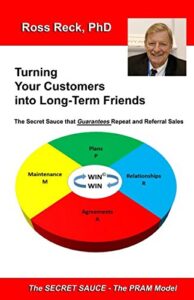
There’s only one way to become an outstanding success as a salesperson. It’s called repeat and referral sales. It doesn’t matter if you’re selling cars, real estate, insurance, pharmaceuticals, financial services or farm equipment. If you don’t focus your efforts on generating repeat and referral sales, you’re going nowhere as a salesperson. Furthermore, there’s only one way in which you can get your customers to provide you with continuing repeat and referral sales and that’s by turning them into long-term friends. Let me give you an example: Joe Girard was a car salesperson for Merolis Chevrolet in Detroit. For 12 straight years Joe was listed in The Guinness Book of World Records for being the world’s best new car salesperson. During his final year of selling cars, Joe sold 1,425 new Chevrolet cars and trucks! That’s 1,425 new Chevrolet cars and trucks sold by a single salesperson during one calendar year! How did Joe do it? The answer is simple. 65% of his sales were to repeat customers and the other 35% were to customers who were referred to him by his repeat customers. So, the year that Joe Girard got into The Guinness Book of World Records for selling 1,425 cars, how many cars did he actually sell? The answer is NONE! His customers sold them for him. Why? Because Joe took the time to turn each of his customers into a long-term friend. As Joe put it, “I stand in front of my product as well as behind it.” In other words, before you could buy a car from Joe, you first had to buy Joe. He wouldn’t let you buy a car from him until he turned you into a friend. Then, after you bought a car from Joe and you experienced a problem either with the car or someone at the dealership, Joe went to bat for you and personally saw to it that the problem was resolved to your satisfaction. Joe also made it a point to stay in touch with his customers after they bought a car from him; he didn’t forget about them and he made sure they they knew it. Yes, Joe truly loved his customers and they loved him back by providing him with enough repeat and referral sales to make it possible for him to sell more than 13,000 cars in 12 years. As Joe said in his book, How to Sell Anything to Anybody, “All of my customers these days are people who ask for me by name. All of them.” You too can enjoy the same level of success as Joe Girard once you stop focusing on making sales and start focusing on turning your customers into long-term friends.
Leave a Reply