

As reported on CNN.com, September 2, 2024
Tech billionaire Elon Musk, a supporter of former President Donald Trump, on Monday posted a fake image of what appears to be Vice President Kamala Harris dressed in a red communist uniform.
“Kamala vows to be a communist dictator on day one. Can you believe she wears that outfit!?” Musk posted on X, the social media platform he owns, in response to the vice president’s post warning about Trump being a “dictator on day one.”
According to X’s policy, users “may not share synthetic, manipulated, or out-of-context media that may deceive or confuse people and lead to harm. … In addition, we may label posts containing misleading media to help people understand their authenticity and to provide additional context.”
References:
- AP News – A parody ad shared by Elon Musk clones Kamala Harris’ voice, raising concerns about AI in politics
- NBC News – Elon Musk made a Kamala Harris deepfake ad go viral, sparking a debate about parody and free speech – A parody campaign ad using a fake Kamala Harris voice reposted by Elon Musk brings questions about deepfakes and the election into sharp focus.
- The New York Times – Elon Musk Shares Manipulated Harris Video, in Seeming Violation of X’s Policies – The billionaire owner of the social media platform X reposted a video that mimics Vice President Kamala Harris’s voice, without disclosing that it had been altered.
Recommended Reading
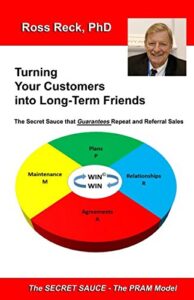
There’s only one way to become an outstanding success as a salesperson. It’s called repeat and referral sales. It doesn’t matter if you’re selling cars, real estate, insurance, pharmaceuticals, financial services or farm equipment. If you don’t focus your efforts on generating repeat and referral sales, you’re going nowhere as a salesperson. Furthermore, there’s only one way in which you can get your customers to provide you with continuing repeat and referral sales and that’s by turning them into long-term friends. Let me give you an example: Joe Girard was a car salesperson for Merolis Chevrolet in Detroit. For 12 straight years Joe was listed in The Guinness Book of World Records for being the world’s best new car salesperson. During his final year of selling cars, Joe sold 1,425 new Chevrolet cars and trucks! That’s 1,425 new Chevrolet cars and trucks sold by a single salesperson during one calendar year! How did Joe do it? The answer is simple. 65% of his sales were to repeat customers and the other 35% were to customers who were referred to him by his repeat customers. So, the year that Joe Girard got into The Guinness Book of World Records for selling 1,425 cars, how many cars did he actually sell? The answer is NONE! His customers sold them for him. Why? Because Joe took the time to turn each of his customers into a long-term friend. As Joe put it, “I stand in front of my product as well as behind it.” In other words, before you could buy a car from Joe, you first had to buy Joe. He wouldn’t let you buy a car from him until he turned you into a friend. Then, after you bought a car from Joe and you experienced a problem either with the car or someone at the dealership, Joe went to bat for you and personally saw to it that the problem was resolved to your satisfaction. Joe also made it a point to stay in touch with his customers after they bought a car from him; he didn’t forget about them and he made sure they they knew it. Yes, Joe truly loved his customers and they loved him back by providing him with enough repeat and referral sales to make it possible for him to sell more than 13,000 cars in 12 years. As Joe said in his book, How to Sell Anything to Anybody, “All of my customers these days are people who ask for me by name. All of them.” You too can enjoy the same level of success as Joe Girard once you stop focusing on making sales and start focusing on turning your customers into long-term friends.
Recommended Reading:
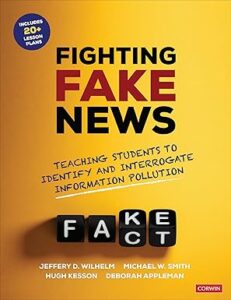
Critical thinking and online reading need to go hand in hand―but they often don’t. Students click, swipe, and believe because they don’t know how to do otherwise. At times, so do we. And that’s a problem. Fighting Fake News combats this challenge by helping you model how to read, myth-bust, truth-test, and respond in ways that lead to wisdom rather than reactivity.
No matter what content you teach, the lessons showcased here provide engaging, collaborative reading and discussion experiences so students can:
- Notice how teacher and peers read digital content, to be mindful of how various reading pathways influence perception
- Identify the author background, the website sponsor, and other evidence that help set a piece in context
- Stress-test the facts by evaluating news sources, reading laterally, and other critical reading strategies
- Use “Reader’s Rules of Notice” to learn to identify common rhetorical devices used to influence the reader
- Be aware of how for-profit social media platforms feed on our responses to narrow rather than widen our reading landscape
We are still in the wild west era of the digital age, scrambling to impart a safer, ethical framework for evaluating information. Thankfully, it distills to one mission: teach students (and ourselves) how to think critically, and we will forever have the tools to fight fake news.
Leave a Reply